2018年10月18日星期四

Skin may regulate blood pressure, study finds

When it comes to high blood pressure, a lack of exercise and a poor diet are often the primary suspects. A new study, however, finds that our skin may play a significant role in the development of the condition.

By studying mice, researchers from the United Kingdom and Sweden found that the skin responds to levels of oxygen in the environment, which influences blood pressure levels.
Study co-author Prof. Randall Johnson, of the Department of Physiology, Development and Neuroscience at the University of Cambridge in the U.K., and colleagues recently reported their findings in the journaleLife.
High blood pressure, or hypertension, is estimated to affect around 75 million adults in the United States.
The condition arises when blood pushes against the wall of the arteries with too much force. This can damage the lining of the arteries, which, in turn, increases the risk of heart attack, stroke, and heart disease.
Being overweight, not partaking in physical activity, and eating a poor diet are major risk factors for high blood pressure, but according to Prof. Johnson and team, many hypertension cases arise with no known cause.
"Most research in this area," says Prof. Johnson, "tends to look at the role played by organs such as the brain, heart and kidneys, and so we know very little about what role other tissue and organs play."
According to the researchers, previous studies have shown that blood flow to a tissue rises when it is starved of oxygen, and that this is down to the presence of a family of proteins known as HIF.
For their study, Prof. Johnson and his colleagues set out to determine how oxygen starvation affects blood flow in the skin, and whether or not this influences blood pressure.
from Drugdu  https://goo.gl/QgQoHk

Samsung’s Galaxy S9 to include blood pressure monitor, research app

Samsung’s latest phones, the Galaxy S9 and S9+, will incorporate a new digital health app that will track users' blood pressure and stress level while helping researchers collect data. Seoul-based Samsung Electronics teamed up with the University of California San Fransisco to develop the research app, called My BP Lab. 

“At Samsung, we have a firm commitment to the health and well-being of our users,”  Peter Koo, senior VP and leader of the Health Service Team at Samsung Electronics, said in a statement. “That’s why we developed a revolutionary optical sensor in the Galaxy S9 and S9+. We are pleased to be partnering with UCSF to utilize this sensor and contribute to research that will provide our users with crucial and meaningful feedback about their health.”
The app uses the Galaxy S9’s new optical sensor to directly measure blood pressure, allowing the smartphone to take readings without any external hardware, according to a statement. 
Researchers at UCSF will get personalized, on-demand information about users’ stress and blood pressure levels. One of the goals of the newly announced study aims to improve the accuracy of the blood pressure readings by collecting data from thousands of users. Researchers also said they want to help users gain a better understanding of their stress and blood pressure levels, according to a statement. 
“This study could provide the largest dataset yet on stress, daily emotional experiences, and blood pressure,” Wendy Berry Mendes, a professor of psychiatry at UCSF and the Director of the Emotion, Health, and Psychophysiology Lab, said in a statement. “Our partnership with Samsung could help people all over the world improve their health by managing stress.”
Users can opt into a three-week UCFS research study that will track stress and how experiences throughout the day impact users. Those who opted in will fill out questions about their behavior, sleep, and exercise. The researchers will then be able to match this with the blood pressure measurements and be able to give participants feedback on their stress levels. 
The company said that the Galaxy S9 and S9+ will expand on its Bixby AI app to include augmented reality. This app is expected to be able to calculate calories in a meal, as well as translate foreign text. 
Samsung has been connected to the digital health field for some time. In fact, in October consumer electronics company announced that two of the spin-out companies from its incubator, C-Labs, are digital health related. One is a phone overlay for people with presbyopia and the other is a glucometer that attaches to a phone and uses its camera to analyze glucose levels. 
Samsung has also been making some key health-related partnerships. Most recently, the company announced that it would be teaming up with MobileHelp, maker of home and wearable medical alert devices, to integrate a personal emergency response system to Samsung Gear S3 smartwatches. 
from Drugdu  https://goo.gl/QgQoHk

New blood pressure guidelines could put lives at risk, say experts

blood pressure guidelines 2018
A new report in JAMA Internal Medicine by the University of Sydney and Bond University scholars weighs the risks and benefits of a recent change to blood pressure guidelines in the US.
The recent recommendations from American College of Cardiology and the American Heart Association are as follows:
  • lowering the threshold for diagnosing hypertension in adults from 140/80 mmHg to 130/80 mmHg
  • lowering the threshold for drug treatment of 'high risk' adults with hypertension who have existing CVD from 140/80 mmHg to 130/80 mmHg
  • lowering the threshold for drug treatment of adults with a calculated 10-year CVD risk ?10%, or otherwise high risk, for example, people with diabetes or renal disease, from 140/80 mmHg to 130/80 mmHg.
Changing the diagnostic and treatment thresholds for hypertension could put people at risk in three ways, says the University of Sydney and Bond University authors of the report.
"First, wider disease definitions mean more people are labeled as unwell, even if they have a low risk of a disease," said the report's lead author, Dr. Katy Bell of the University of Sydney.
"Labeling a person as having hypertension increases their risk of anxiety and depression, as compared to the risk for people with the same blood pressure who aren't labeled as hypertensive.
"Second, it means more people may experience serious adverse effects from treatments.
"Third, in countries without universal health coverage, such as the United States, people newly diagnosed with hypertension may face difficulties gaining insurance coverage for a 'pre-existing' condition."
Report co-author, Bond University Professor Paul Glasziou said: "The ACC/AHA guideline follow an established pattern in the medical specialties, where disease definitions are more often widened than narrowed.
"Systolic blood pressure has poor reproducibility, with a 10mmHg standard deviation for repeat measurements between clinics," he added.
"Since a large proportion of all adults have a 'true' systolic blood pressure near the threshold of 130 mm Hg, the inherent variability of blood pressure increases the potential that hypertension will be diagnosed."
The report says 80 percent of people with newly diagnosed hypertension under the ACC/AHA guideline would get no expected benefit in terms of cardiovascular disease risk reduction by lowering their blood pressure. Eleven percent would get a marginal benefit and nine percent would get a larger benefit.
However, the 2017 ACC/AHA guideline would classify an additional 13.7 percent of all adults as having hypertension - 31 million additional people in the United States as having hypertension, and around 2.4 million additional Australians.
For the majority of these people, who are at low risk and not recommended for drug treatment (about 25 million), the authors say doctors should not label them as having hypertension.
"Doctors should continue to support healthy choices with regard to diet and physical activity regardless of whether a patient's systolic blood pressure is above or below 130 mmHg," said Bond University co-author, Professor Jenny Doust.
"When there is a question of starting blood pressure medication, the risk of cardiovascular disease should be estimated using a reliable risk calculator and the potential benefits and harms discussed with the patient".
from Drugdu  https://goo.gl/QgQoHk

ICU patient monitors in China

"/

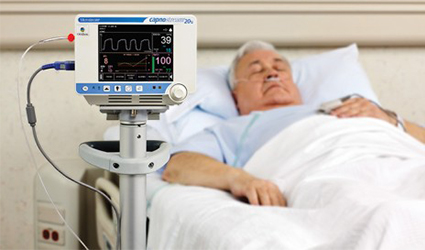
Patient monitors are used in intensive care units to view the patient’s physiological health condition in real time for an easier decision-making and qualitative care by the doctors.
A patient monitor consists of a sensor, processing component and a visual display. Additionally, an alarm is also attached to alert the staff. The sensor detects the physiological level of the patient vitals. The processing component converts the sensor signals to the format which can be displayed via LED, LCD or CRT screen.
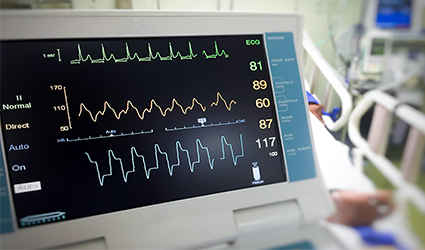
The major vital parameters such as respiratory rate, cardiac rate, hemodynamic rate, blood glucose, body temperature, oxygen saturation, intracranial pressure etc. can be viewed as a waveform or numerical formats through the patient monitor.
Buying the product from a right patient monitor supplier is mandatory in order to avoid the occurrence of clutters due to complicated data integration on monitor display, usability and hardware issues and consistency violation.
Our drugdu team is in collaboration with patient monitor manufacturers such as Lutech industries, Better Life Medical, Troline technology Co. Ltd., Beijing Guanbang Group Co. Ltd., Lifeguard Medical Systems Private Ltd., Shenzhen BOXYM Technology Co. Ltd., etc. for the supply of patient monitor wholesale such as multi-parameter ICU portable monitor, handheld monitor, etc. according to every healthcare demand.
The post ICU patient monitors in China appeared first on Drugdu.com
from Drugdu  https://goo.gl/QgQoHk

Don’t Miss These Tips before Your Cardiac Monitor Purchase

"/
 Cardiac Monitor in China
A cardiac monitor is a precision medical instrument, which can be used both in hospitals and at home. The heart is the engine of our bodies, it keeps pumping blood in and in to ensure the nutrients in the blood is delivered to the whole body.
The performance of our hearts is a significant index to mirror health conditions. A cardiac monitor can monitor a patient’s heart health in real-time by providing the physiological parameters of ECG patterns, which proves the necessity of cardiac monitor within the medical treatment. Other physiological parameters such as respiratory, body temperature, blood pressure, blood-oxygen saturation and pulse rate can also be detected by the cardiac monitor.

Cardiac monitors are used to execute EPS procedures, diagnostic tests as well as therapeutic procedures. The device can also analyze atrio-ventricular conductions via targeted stressors, determine the intervention and assess the sinus node function. Before purchasing and cardiac monitor consider the following tips:

1. A cardiac monitor should be equipped with amplifiers and filter for signal acquiring and processing. It should also be equipped with a display screen and a recorder. Pre-existing amplifiers can be used and be interfaced with a corresponding display screen and recorder.
2. Cardiac monitors may be tabletop, mobile or wall-mounted depending on what their required positioning should be.
3. The devices should be equipped with at least 12 surface electrocardiogram channels and 24 intra-cardiac electrocardiogram channels, as well as programmed lead switching allowing physicians to select the maximum channels depending on procedural requirements.
4. A console with high-resolution color monitors should be fitted to display waveforms and other relevant data on an integrated computer system, which should be equipped with media recording and data processing software. 
5. A cardiac monitor should have a chart recorder with printing functions, plug-in modules with vital signs and procedure monitoring functions as well as a remote amplifier unit to process and condition cardiac electrode signals.
6. A cardiac monitor should be able to print out the interpretation chart by referring to various reference lines. It should also be able to access the cardiac CAT lab imaging systems and radio frequency generating devices as well as use multitasking software with user-configurable parameters that allows real-time signal analysis. 
7. These devices should have the capability to access to the NCD (National Cardiology Database) and the system of cardiology data management.
As the importance of electro-cardiac monitors is notable, the demand in the medical market is predicted to continuously growing. Before making a purchase you need a professional guideline to ensure the quality of your intended buy. This is where our team at Ddu, a global cross-border medical trade B2B e-commerce platform, can assist you in realizing your  goals.
Click here for more information about the hang-picked online cardiac monitor rallies and ECG monitor.
from Drugdu  https://goo.gl/QgQoHk
Invention of smartphone app to record blood pressure

"/

Everyone is well aware that hypertension should be maintained under control with proper medications and lifestyle changes. But many are unable to keep track of their blood pressure level regularly.
A team of scientists led by the professor named Ramakrishna Mukkamala, from MSU electrical and computer engineering have invented a novel smartphone app to measure the blood pressure, using the optical and force sensors in smartphone. These research findings were published in the journal named Scientific Reports.
Ramakrishna Mukkamala, the lead investigator said, "By leveraging optical and force sensors already in smartphones for taking 'selfies' and employing 'peek and pop,' we've invented a practical tool to keep tabs on blood pressure; Such ubiquitous blood pressure monitoring may improve hypertension awareness and control rates, and thereby help reduce the incidence of cardiovascular disease and mortality."
Earlier in 2018, the research team had proposed a concept of blood pressure app in addition to hardware settings like sensors, which matches the standard medical readings. But now with many advances, there is no need of hardware add-ons. Peek and pop, with a simple push of their finger is more than enough.
The team is hoping to make the app available in late 2019, which would be a sure-shot game-changer as it would become convenient to keep track of measurements regularly.
Ramakrishna Mukkamala further said, "Like our original device, the application still needs to be validated in a standard regulatory test; But because no additional hardware is needed, we believe that the app could reach society faster."
Hereafter there is no need of any special instrument for blood pressure measurement. Hence, it would be easier to improve awareness about maintenance of blood pressure among the people.
from Drugdu  https://goo.gl/QgQoHk
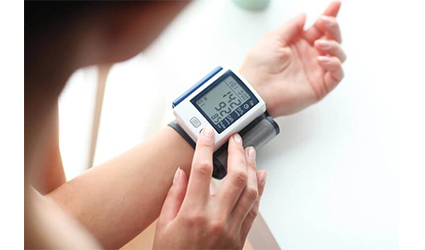
How to Select the Right Blood Pressure Monitor

"/
Blood Pressure Monitor in China

Heart disease is considered to be the number one cause of death throughout the world. Those who are facing lifestyle diseases such as heart problems are more prone to hypertension. Hence there is a global need for blood pressure monitors especially among the elderly. In order to keep track of their health condition, many new blood pressure monitors are connected to smartphones and computers via Bluetooth in order to self-monitor their pressure level easily. 

According to the latest report by Allied Market Research, it is predicted that the global blood pressure monitor device market will reach $2,926 million by 2022, with an annual growth rate of 5.7% from 2016 to 2022. The Asia-Pacific region is expected to have the highest number of blood pressure monitor suppliers with an increased market rate of 7.1% from 2014 to 2022.
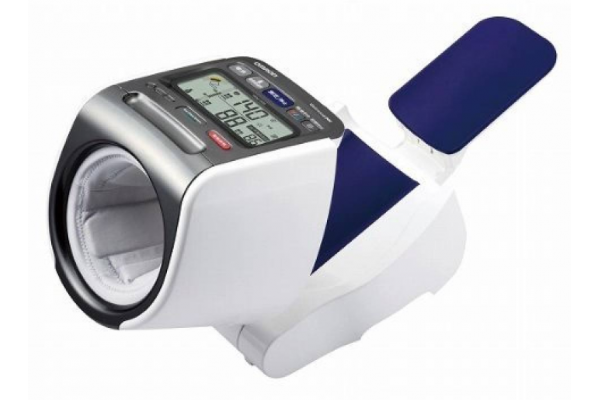
A blood pressure monitor that measures BP on the upper arm, should have an arm cuff that is properly sized for an accurate reading.
For a properly sized cuff attached to a blood pressure monitor, the arm around the bicep area should be measured. As per the given below range, the right sized cuff should be selected.
  • 7-9 inches - small cuff
  • 9-13 inches - standard cuff
  • 13-17 inches - large cuff
  • 17 inches - extra-large cuff
Are you looking for a trustworthy manufacturer? Our drugdu.com team has compiled a list of reputable blood pressure monitor wholesalers to help you choose the right one! Click here to see more.

Hi- tech Ambulatory Blood Pressure Monitor

"/
Hi- tech Ambulatory Blood Pressure Monitor

The 24hours Ambulatory Blood Pressure monitor manufactured by the Chinese company, Shenzhen Hingmed Medical Instrument Co. Ltd. is a hi- tech good quality blood pressure monitor available on Ddu (Drugdu.com), the leading global pharmaceutical and medical devices online B2B platform.

Ddu selects the best- in- class medical products and its suppliers and this blood pressure monitor is one of them. It works with the help of the ABPM software system which is the only software in the world which provides index analysis of Morning Surge, BP smoothness, CV, AASI, etc. It gives highly accurate reading and includes Motion tolerance technology which gives good measurement consistency.
It has a double pressure transducer, with double protection. Its cuff comes with a disposable sweat absorbable liner and the cuff itself can be removed for easy washing. Its software is compatible with Microsoft Windows 2003, Windows XP or higher version application environment. It also includes a feature that enables BP comparison of the same patient’s measurements at different times.
Buy blood pressure monitor on Drugdu.com.
from Drugdu  https://goo.gl/QgQoHk